
How do I get from here to there? You try out a new pose and realize you don’t have enough strength/flexibility to enter, hold, or breathe in the pose! What do you do? Modify.
Ok, so how do you modify poses that are really simple? Use your props! Good teachers will offer modifications for poses throughout a class, and great teachers will notice you struggling specifically and workshop some modifications with you. But knowing how to modify the poses yourself will make you feel more comfortable using those mods in class. So grab a couple blocks* and let’s get started!
*If you don’t have the traditional yoga equipment, check out my post “Prop Yourself Up” where I give you some alternatives you probably already have in your house.
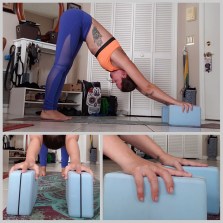 The first pose I want to talk about is Downward Facing Dog. Many people (and instructors) believe this is an easy pose or even a resting pose. But for those with tight shoulders or hamstrings, this pose can be challenging. My favorite modification for this pose is to use blocks under your hands. Place one block under each hand, index finger pointing forward and all other fingers gripping onto the sides of the block. Press into the blocks like you would press into the mat. Press your chest through your arms toward your toes. Think about lifting your hips and tailbone up to the sky. The block lifts your upper body a bit giving you more space. The blocks can also help alleviate pain in the shoulders by providing a more cushioned surface for the hands.
 Another pose you can use your blocks with is Chaturanga Dandasana aka the yogi push-up. I like to place the blocks under my shoulders to provide support as you work on strengthening your core and maintaining correct alignment. While in Chaturanga, squeeze the elbows into the midline. Pull into your core, keeping your abdomen engaged. Keep the legs engaged by pressing back through the heels.
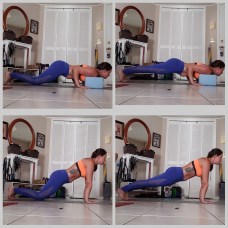 You can also make another modification to Chaturanga or Plank pose without any props! It’s a simple cue that you have most likely heard in almost every class but maybe you don’t hear it. Simply bend your knees, resting them on the mat. Your upper body alignment should not change at all. You can even do a mini core workout by moving between straightening the legs and resting the knees on the mat, focusing on maintaining upper body alignment.
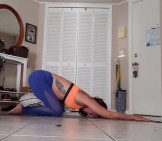 Child’s pose can also be surprisingly uncomfortable if you have tight knees. An easy modification is to place a blanket or small pillow between the knees and the thighs. This gives you more space between the backs of your legs so the stretch in the fronts are not as intense. Again this stretch is meant to target your back body so it’s not necessary to sit completely onto your heels.
 The final modification tip I will give you is in regards to any type of forward fold. You DON’T HAVE to keep your legs straight! The purpose of a forward fold is to get a nice stretch along the back body both top and bottom- you can still get a good stretch with your knees bent. If you feel tightness or any kind of intense discomfort in the backs of the knees during a forward fold, you SHOULD bend them! Over stretching can lead to injuries that hinder your progress and daily life.
So remember these modifications, practice them and use them when you need to. Don’t feel ashamed or embarrassed using props or modifications in class. Yoga class is meant to introduce you to new movements and breath work. Most importantly, yoga class is a place where you learn about yourself- your strengths, weaknesses, goals, and abilities. Be kind to your body and mind by practicing within your limits and using mods when your body tells you to.
Have a great Friday! See you next week.
Peace and Love,
Melissa
 A Yogi's Mind